


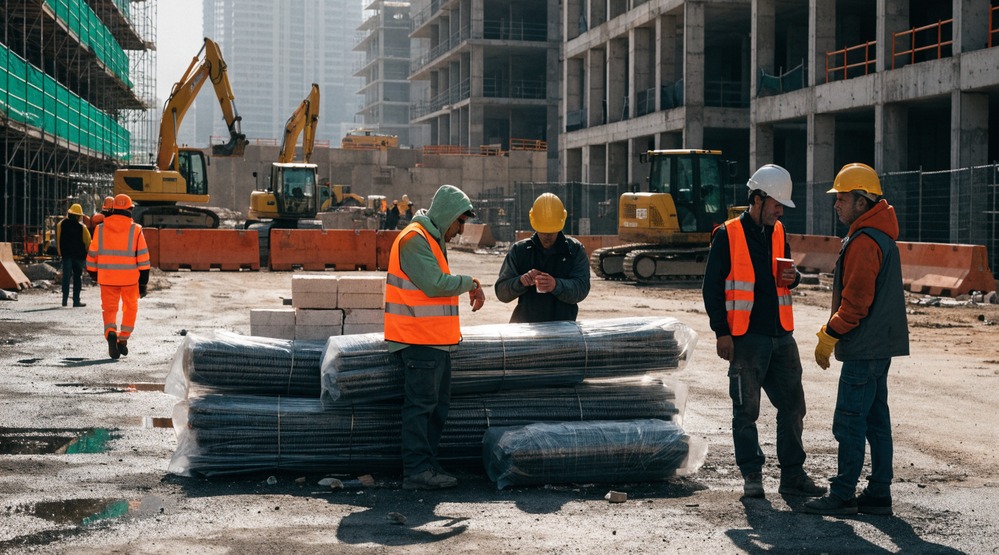


Construction delays and cost overruns rarely come from one mistake. More often, they begin with small issues during preconstruction—an overlooked specification, a scope gap, an inaccurate quantity, or differences between subcontractor bids.
By the time these problems appear on the jobsite, fixing them can be expensive.
This is where artificial intelligence is starting to attract attention in construction. MeltPlan AI is designed to help general contractors and preconstruction teams analyze project information, compare bids, review documents, and improve estimating workflows.
But can it really reduce construction delays and costs?
The answer is more nuanced than a simple percentage. AI can help construction teams identify risks earlier and reduce repetitive work, but project outcomes still depend on many factors, including design changes, procurement, labor, subcontractors, weather, and site conditions.
What Is MeltPlan AI?
MeltPlan describes itself as an AI-first preconstruction platform for general contractors.
Its current platform includes tools for:
- Construction document review
- Quantity takeoff
- Bid scoping and leveling
- Building-code research
- Cost benchmarking
- Construction planning
The company’s broader objective is to build what it calls a planning engine for construction, helping teams make decisions before scope is locked and procurement or construction commitments become difficult to change.
That is an important distinction from a general-purpose chatbot.
An estimator is not simply asking an AI to summarize a document. The system needs to work with drawings, specifications, subcontractor proposals, quantities and structured project information.
MeltPlan says its platform uses construction-specific models, workflow “harnesses” and guardrails to control how AI performs these tasks.
How Can MeltPlan Help Construction Teams?
1. Faster document review
Construction projects can involve hundreds or thousands of pages of drawings, specifications, addenda, and other documents.
Finding a specific requirement manually can take considerable time.
AI-assisted document review can help identify relevant information and potential inconsistencies more quickly. The estimator can then review the finding and determine whether it actually affects the project.
2. Better bid comparison
Bid leveling is another area where AI can be useful.
Two subcontractors may submit different prices while making different assumptions about what is included in their scope.
For example, one electrical contractor might include certain equipment or installation work while another excludes it. Simply comparing the final prices could make the cheaper proposal appear more attractive than it actually is.
AI-assisted bid leveling can help standardize proposals and highlight differences, exclusions, and potential scope gaps.
That gives the preconstruction team a better basis for comparison.
3. Faster quantity takeoff
Quantity takeoff is an important part of estimating, but it can also be repetitive and time-consuming.
AI-powered tools can help extract quantities from construction drawings and organize the information for estimating.
The estimator still needs to verify the results, especially on complex projects, but automation can reduce some of the manual workload.
4. Earlier identification of risks
One of the biggest potential benefits of AI in preconstruction is timing.
Finding a scope issue before a subcontract is awarded gives the contractor an opportunity to clarify the requirement.
Finding the same issue after construction begins can lead to change orders, additional labor, procurement problems, or schedule disruption.
In that sense, AI may help reduce risk by helping teams discover information earlier.
Can MeltPlan Actually Reduce Construction Delays?
AI cannot prevent every type of construction delay.
Weather, permitting, labor shortages, material availability, design changes, site conditions, and subcontractor performance can all affect a project schedule.
However, AI can potentially reduce delays caused by information and coordination problems.
For example, if an incomplete scope is identified during estimating rather than after construction begins, the team has more time to address it.
The goal is not necessarily to make construction itself faster. It is to help teams make better-informed decisions before problems become expensive.
What About the 30% Delay and 25% Cost Reduction Claims?
The original headline associated with MeltPlan claimed that the technology could cut project delays by 30% and costs by 25%.
Those figures should be treated carefully.
There is not enough independent public evidence to present those percentages as a proven result across construction projects.
That does not mean MeltPlan cannot provide measurable benefits. It means the specific percentages should not be treated as universal industry results without knowing the underlying project sample, methodology, baseline, and independent validation.
Construction performance is influenced by many variables outside the control of preconstruction software.
A more realistic way to evaluate the technology is to measure things such as:
- Estimating time saved
- Number of scope gaps identified
- Bid packages processed
- Reduction in repetitive manual work
- Time required for bid leveling
- Errors identified before construction
- Amount of rework avoided
These measurements can provide a much clearer picture of whether AI is delivering value for a particular contractor.
How Accurate Is MeltPlan AI?
MeltPlan publicly reports 95%+ accuracy across its preconstruction AI tools.
For its Melt Bid workflow, the company says it evaluated 100 bid proposals across 40 packages, generating 8,500 data points. It reports an accuracy rate of 95.3% against evaluations made by expert estimators.
These are company-reported benchmarks, so they should be understood in the context of the specific testing methodology rather than interpreted as a guarantee that every project output will be 95% accurate.
Construction companies considering AI should test the technology using their own drawings, specifications, historical projects, and estimating workflows.
AI Still Needs Construction Professionals
One of the most important points about construction AI is that automation does not eliminate professional judgment.
AI can identify a potential scope gap, but an estimator needs to decide whether the issue is actually relevant.
AI can compare subcontractor bids, but a preconstruction manager still needs to consider experience, exclusions, qualifications, capacity, and commercial risk.
Human expertise remains essential for:
- Constructability
- Scope interpretation
- Project-specific conditions
- Subcontractor evaluation
- Contract responsibilities
- Risk management
- Final pricing decisions
The most useful role for AI is therefore to support experienced construction professionals, not replace them.
Why AI Is Becoming Important in Preconstruction
Construction companies are under constant pressure to improve productivity while managing tighter schedules and rising complexity.
Construction companies are under constant pressure to improve productivity while managing tighter schedules and rising complexity.
A system that helps an estimator review documents faster, compare bids more consistently, or identify potential gaps earlier can potentially create value before construction begins.
MeltPlan’s recent investment activity also reflects the growing interest in AI-powered construction planning. The company announced a $14 million funding round in 2026 to expand its construction planning platform.
However, funding and technology adoption should not be confused with proof of a specific reduction in project delays or costs.
The real test is whether contractors can measure improvements in their own workflows.
Final Takeaway
MeltPlan AI highlights an important change in construction: artificial intelligence is moving beyond general productivity tools and into specialized preconstruction workflows.
Its potential value is not simply about promising fewer delays or lower costs
The bigger opportunity is helping construction teams find problems earlier, process information faster, and make better-informed decisions before construction begins.
For contractors evaluating MeltPlan or similar AI platforms, the best approach is to start with measurable workflows.
Track estimating time, bid-leveling efficiency, scope issues identified, manual work reduced, and errors caught before construction.
If those numbers improve, the technology has demonstrated practical value.
AI may not eliminate construction delays or cost overruns—but helping teams identify risks earlier could make a meaningful difference.
Frequently Asked Questions
What is MeltPlan AI?
MeltPlan is an AI-first preconstruction platform for general contractors. It provides tools for document review, quantity takeoff, bid leveling, code research, and construction planning.
Can MeltPlan reduce construction delays?
It can potentially help reduce delays related to scope gaps, document inconsistencies, and other preconstruction issues by helping teams identify problems earlier. It cannot eliminate delays caused by weather, labor, permitting, site conditions, or other external factors.
Can AI reduce construction costs?
AI can potentially reduce avoidable costs by improving estimating, bid comparison, takeoff, and document review. However, there is no basis for assuming a fixed percentage reduction in total project costs across all construction projects.
Does AI replace construction estimators?
No. AI can automate repetitive information-processing tasks, but construction professionals are still needed to verify results, interpret project requirements, evaluate risk, and make final decisions.
Is MeltPlan AI accurate?
MeltPlan reports 95%+ accuracy across its preconstruction AI tools and reports a 95.3% result for its Melt Bid evaluation. These figures are company-reported benchmarks and should be evaluated against the specific methodology and a contractor’s own project data.