

India’s infrastructure sector continued to show steady momentum in August 2026, with output across the country’s core infrastructure industries rising 4.8% year-on-year.
The latest figures point to continued activity in construction and industrial supply chains, although the performance was not uniform across every sector. Cement and electricity recorded strong gains, while some energy-related industries moved in the opposite direction.
The August result follows revised growth of 5% in July, according to government data. For the April–August period, core-sector output was up 4.3%, compared with 2.4% during the same period a year earlier.
Cement and Electricity Provide a Strong Push
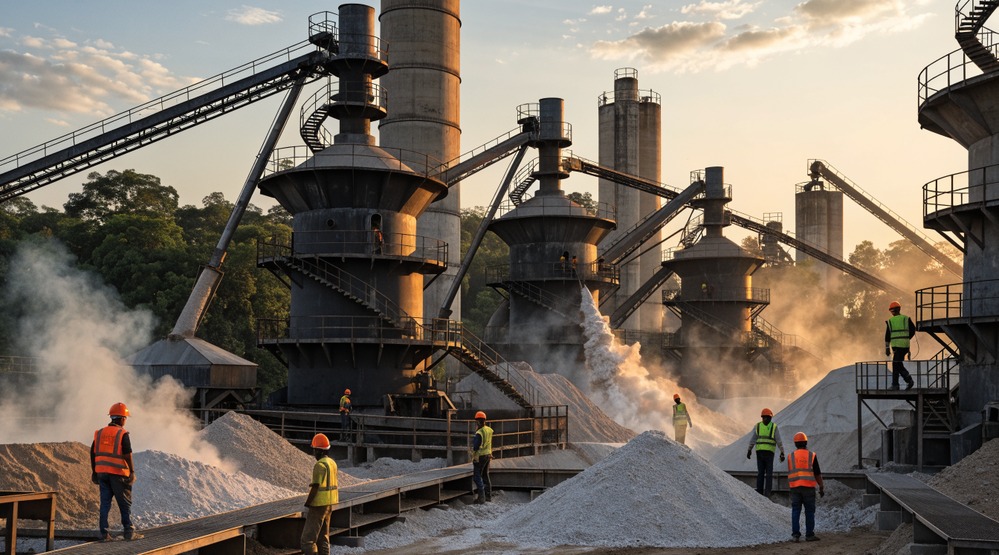
Cement was one of the biggest contributors to the August increase, with production rising 12.5% year-on-year.
For the construction industry, this is an important number. Cement demand is closely tied to activity across roads, housing, commercial developments, industrial facilities and other infrastructure projects. Higher production can therefore indicate that construction activity remains relatively firm.
Electricity generation also recorded strong growth, increasing 11.6% from a year earlier. Rising electricity output can reflect higher demand from factories, commercial establishments and other parts of the economy.
Steel production, another important indicator for construction and infrastructure, grew 3.4%. Iron ore output increased by 5.5%, while refinery products recorded a more modest 2.6% rise.
Taken together, these numbers suggest that several parts of the construction materials and industrial supply chain remained active during the month.
Growth Was Not Even Across All Sectors
The headline 4.8% growth figure, however, does not tell the whole story.
Several core industries recorded declines in August. Coal production fell 3.8%, while crude oil output dropped 3.6%. Natural gas production was down 4.9%, and fertiliser production recorded a sharper decline of 12.4%.
For infrastructure companies, this mixed performance matters. Construction activity depends on a much wider network of materials, energy and industrial inputs. Strong performance in cement and steel does not necessarily mean that every part of the supply chain is moving at the same pace.
It is also a reminder that monthly figures can move considerably depending on production conditions, demand and other economic factors.
Infrastructure Activity Has Improved Since April
Looking at the first five months of the financial year gives a broader picture.
India’s core-sector output increased 4.3% between April and August 2026, compared with 2.4% during the corresponding period last year.
That improvement indicates that infrastructure and related industrial activity has gained some momentum during the current financial year. However, maintaining that pace will depend on how the individual sectors perform over the coming months.
For construction companies, developers and material suppliers, the trend in cement, steel, iron ore and electricity is particularly relevant because these industries are closely connected to project activity.
What This Means for India’s Construction Industry
The August numbers present a picture of continued growth, but not a broad-based surge across every infrastructure industry.
Strong cement production, along with higher steel and iron ore output, points to ongoing demand from construction and industrial projects. Electricity growth adds another positive signal, particularly as manufacturing and commercial activity continue to require more power.
At the same time, declines in coal, crude oil and natural gas show that the wider infrastructure and energy landscape remains mixed.
For contractors and project developers, the more useful takeaway may therefore be to look beyond the headline 4.8% infrastructure growth in August 2026 and follow the individual sectors that directly affect project costs, material availability and construction schedules.
India’s continued investment in roads, buildings, industrial facilities, power infrastructure and other major projects should keep these indicators firmly on the radar of the construction industry.
The next few months will show whether the current improvement can develop into a more sustained period of infrastructure growth.