


The U.S. construction industry is facing two connected challenges: delivering buildings more efficiently while improving their energy performance.
Traditionally, construction productivity and building energy efficiency have been treated as separate priorities. Contractors focus on labor, schedules, materials, and installation, while energy specialists focus on efficiency and long-term building performance.
The U.S. Department of Energy (DOE) is taking a more integrated approach through its Advanced Building Construction (ABC) Initiative, led by the Building Technologies Office (BTO).
The initiative explores advanced construction methods, off-site manufacturing, prefabrication, digital technologies, energy-efficient systems, and new approaches to building retrofits.
For contractors, developers, and building owners, the goal is not simply to build faster. It is to find better ways to design, manufacture, assemble, and upgrade buildings while improving their long-term performance.
What Is the Advanced Building Construction Initiative?
The Advanced Building Construction Initiative focuses on combining energy-efficient building technologies with more productive construction and retrofit methods.
Instead of designing a building using conventional processes and adding efficiency measures later, the ABC approach considers construction methods and building performance together from the beginning.
The initiative covers two major areas:
- New construction
- Existing-building retrofits
Retrofits are particularly important because a large portion of the U.S. building stock already exists. Improving the energy performance of those buildings can require significant work, especially when projects involve occupied buildings, restricted access, or unpredictable existing conditions.
The ABC Initiative therefore explores ways to make high-performance upgrades faster, less disruptive, and more practical to deploy.
Key Technologies Behind Advanced Building Construction
The ABC Initiative is not based on one technology. It brings together several approaches that can improve construction productivity and building performance.
1. Off-Site and Industrialized Construction
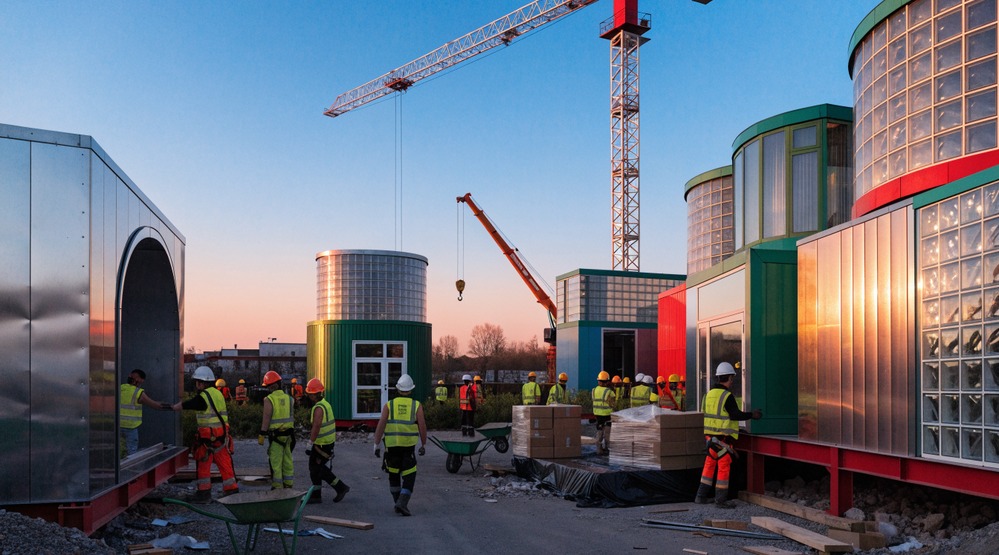
Off-site manufacturing moves part of the construction process from the jobsite into a controlled manufacturing environment.
Walls, panels, and other building components can be manufactured or partially assembled before being transported to the project.
This approach can improve production consistency and reduce the amount of work that has to be completed on-site.
This approach can improve production consistency and reduce the amount of work that has to be completed on-site.
For contractors dealing with labor constraints or tight schedules, reducing site-intensive work can be an important advantage.
2. Prefabricated Building Components
Prefabrication takes this idea further by combining multiple building requirements into manufactured components.
For example, wall panels can incorporate insulation and other performance-related elements before they arrive at the jobsite.
This can be particularly useful for retrofit projects. Instead of performing every stage of an upgrade inside an occupied building, components can potentially be prepared in advance and installed more quickly.
The result can be a more standardized construction process with less disruption to building occupants.
3. Digital Construction Technologies
Digital tools are another important part of advanced building construction.
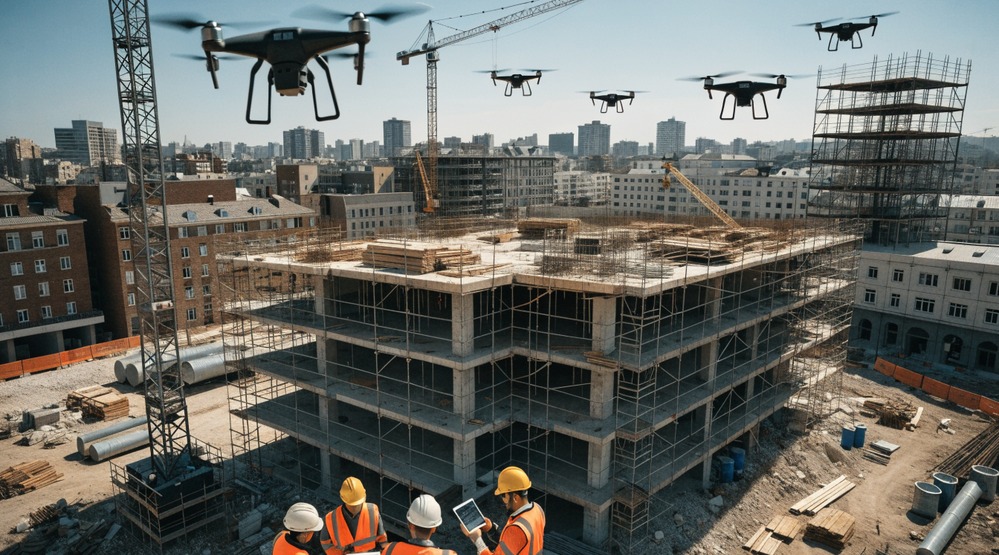
Technologies such as digital twins can connect information from design through manufacturing, installation, and building-performance monitoring.
DOE-supported projects have explored digital-twin applications for prefabricated retrofit systems, including overclad panels and their connections.
The value of these technologies is not simply that they make construction more digital. Their potential comes from connecting different stages of the project so that design decisions, manufacturing requirements, installation, and building performance can be considered together.
4. Advanced Materials and Building Systems
The ABC Initiative also supports research into advanced materials and energy-efficient building systems.
These technologies can include improved building envelopes, HVAC systems, insulation solutions, and other components designed to improve building performance.
The broader objective is to evaluate these technologies as part of an integrated building system rather than as isolated products.
Why Building Retrofits Matter
Existing buildings represent a major opportunity for improving energy performance.
Older buildings may have outdated insulation, heating and cooling systems, ventilation, or other components that affect energy consumption and occupant comfort.
However, retrofitting an existing building can be more complicated than constructing a new one.
Projects may have to work around occupants, limited access, existing structural conditions, and unexpected site issues. Traditional retrofit methods can also require significant on-site labor and create disruption.
The ABC Initiative is exploring ways to address these challenges through prefabricated retrofit panels, integrated mechanical systems, digital building assessments, and other advanced approaches.
One example involves combining digital-twin technology with prefabricated overclad panels. The project also considers building performance after installation, allowing actual results to be compared with modeled energy savings.
That measurement is important.
A construction technology should not be judged only by how advanced it appears. Its real value depends on whether it performs effectively in the field, delivers expected energy savings, controls costs, and can be scaled to other projects.
What the ABC Initiative Means for Construction Companies
For contractors and developers, the ABC Initiative signals continued interest in construction methods that combine productivity with building performance.
Areas receiving attention include:
- Prefabrication
- Modular construction
- Factory-based manufacturing
- Digital construction workflows
- Automated installation
- High-performance building envelopes
- Energy-efficient HVAC
- Building-performance monitoring
- Data-driven retrofit planning
However, adopting these technologies involves more than purchasing new equipment.
Construction companies still need to consider supply-chain capacity, transportation, workforce skills, building codes, site conditions, product availability, and project economics.
A prefabricated system, for example, only provides its intended benefits when components can be manufactured consistently and integrated efficiently at the project site.
That means technology is only one part of the equation. Workforce training, market demand, business models, and practical project delivery also matter.
Is Advanced Building Construction the Future?
The DOE’s ABC Initiative shows that advanced construction and energy-efficiency technologies are being developed together rather than independently.
That does not mean every advanced construction method will automatically produce a more energy-efficient building.
Actual performance still depends on design, materials, installation quality, mechanical systems, climate, operations, and maintenance.
The larger opportunity is to bring high-performance decisions earlier into the construction process.
When components are designed for efficient manufacturing, installed consistently, and supported by digital tools and performance monitoring, energy efficiency can become part of the construction workflow instead of an issue addressed near the end of a project.
The Bigger Shift in Construction
The Advanced Building Construction Initiative reflects a broader shift in the industry.
The goal is not simply to shorten construction schedules. It is to develop building methods that can deliver high-performance buildings more efficiently and at greater scale.
As contractors face labor constraints, cost pressures, tighter schedules, and increasing expectations for building performance, technologies such as prefabrication, modular construction, digital workflows, advanced materials, and energy-efficient systems are likely to receive continued attention.
For construction companies and building owners, the key question will be practical:
Can these technologies deliver measurable improvements in cost, installation, energy performance, and project delivery?
That is ultimately where advanced building construction will prove its value.
Key Takeaway
The Advanced Building Construction Initiative brings two priorities together: construction productivity and building energy performance.
Its approach includes off-site manufacturing, prefabrication, digital technologies, advanced materials, energy-efficient systems, and improved retrofit methods.
The long-term impact will depend not only on technological innovation but also on whether these solutions are affordable, repeatable, practical, and scalable across real-world projects.
For the construction industry, the important shift is clear: building performance is increasingly being considered alongside how buildings are designed, manufactured, assembled, and upgraded.
Frequently Asked Questions
What is the Advanced Building Construction Initiative?
The Advanced Building Construction Initiative is a U.S. Department of Energy program focused on combining energy-efficient building technologies with more productive construction and retrofit methods.
What technologies are part of advanced building construction?
The initiative covers approaches including prefabrication, modular and off-site construction, digital building technologies, advanced materials, energy-efficient systems, and retrofit solutions.
Why are building retrofits important?
Existing buildings represent a significant opportunity to improve energy performance. Advanced retrofit methods can potentially reduce on-site work, shorten installation time, and minimize disruption to occupants.
Does advanced construction automatically mean better energy efficiency?
No. Building performance also depends on design, materials, installation quality, mechanical systems, climate, operations, and maintenance. Advanced construction methods are tools that can support better outcomes but do not guarantee them.
What does the ABC Initiative mean for contractors?
Contractors may see increasing opportunities to use prefabrication, modular construction, digital workflows, high-performance building systems, and data-driven retrofit methods. Successful adoption will also depend on workforce skills, supply chains, codes, site conditions, and project economics.